An Extension of the Self

Intro

The disposable nature of artificial intelligence infects all current products, making it their greatest flaw. In this article, I will explore why our most advanced tools are suffering from “digital amnesia”, how we can fix it today using open sourced tools (with a demo and code), and why the future of our digital identity depends on the battle between privacy and convenience.

Fragmented Intelligence

We are currently witnessing a fragmentation of intelligence. Every time you open a new AI tool, you are forced to introduce yourself all over again. You explain your coding style to one, your dietary restrictions to another, and your personal goals to a third. Current AI models are brilliant but “amnesiac”; exist in silos, having every session as a blank state or, at best, trapping your history within a single proprietary walled garden.
[Read more]

The Hard Truth - Why Distribution Trumps Innovation

Intro

You might think that the best product wins, right? That’s what most of us would like to believe. After all, if you put in the hard work, pour your soul into crafting the most innovative, efficient, and user-friendly technology, you should reap the rewards. But here’s the kicker: in the real world, the best product doesn’t always win. Instead, it’s the product that touches the most people, grabs the most attention, and gets adopted by the masses that ends up dominating the market. And all of this boils down to one simple truth: distribution is everything.

[Read more]

Authenticating AI Models in Decentralized Networks: A Practical Approach

Introduction

Ensuring the integrity and authenticity of AI models in decentralized or adversarial environments is a significant challenge. Users need confidence that the models they interact with are genuine and unaltered. Traditional methods like watermarking provide some solutions but come with notable drawbacks. This article explores alternative approaches, including statistical uniqueness, to authenticate AI models effectively.

We’ll start by exploring the watermarking technique and its limitations, then dive into how statistical uniqueness offers a more reliable approach for decentralized AI model authentication. Finally, we’ll look at potential cost optimizations and consider how this method could be applied to hardware authentication.

[Read more]

The Inception of Doppelganger Networks

Intro

We are starting to see a new approach, a new type of blockchain network, that mimics what an existing network does and is, but they don’t do it exactly as the original one.

This new approach has a few characteristics that define it. It mirrors an existing chain but changes the original rules. Mirroring the existing chain is done by replaying the transactions just as they are, but changing the original rules makes them incompatible with the original chain. This creates room for new features to flourish but also some interesting problems, which we will explore in this article.

[Read more]

The Right Way to Use Transient Storage (Eip 1153)

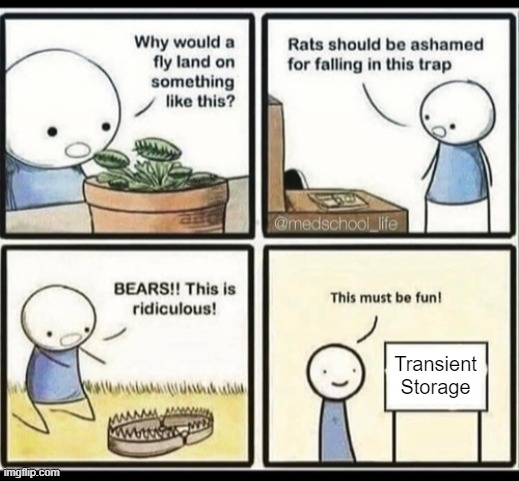
A new chapter is being written with the introduction of Transient Storage, courtesy of EIP-1153 . This upgrade promises to revolutionize the temporary storage and management of data within transactions, stirring quite a debate in the community. It aims to optimize gas costs and enhance the efficiency of smart contracts. Yet, for all its potential, it’s easy to misuse, leading to costly mistakes.

A trap

Who This Article Is For

If you’re a developer familiar with Solidity and keen on Ethereum’s latest, this article is for you. Whether you’re looking to optimize smart contracts or explore new features, we’ll dive into how Transient Storage opens up new possibilities.

[Read more]